
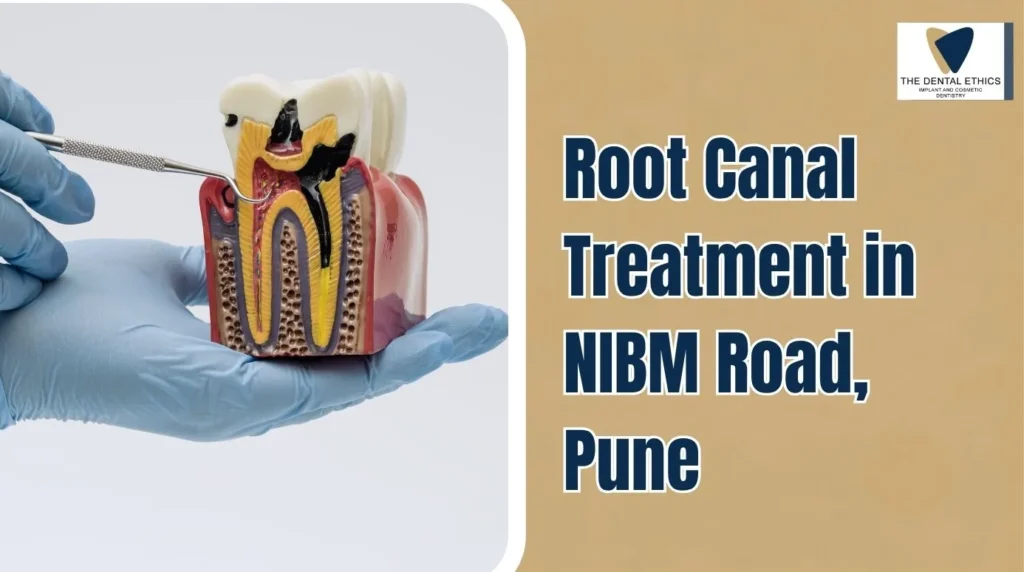
Persistent tooth pain can disrupt everyday life, from eating your favourite meal to getting a good night’s sleep. If you’re searching for reliable root canal treatment in NIBM Road, Pune, you’re likely dealing with discomfort that needs professional attention. At The Dental Ethics, located on NIBM Road, Dr. Umang Shah and Dr. Jyoti Shah provide root canal treatment aimed at relieving pain and helping patients retain their natural teeth wherever possible. This guide walks you through everything you need to know about root canal treatment, so you can make an informed decision about your dental health.
What Is a Root Canal Treatment?
A root canal treatment is a dental procedure used to treat infection or inflammation inside the tooth’s pulp, the soft tissue containing nerves and blood vessels. Deep decay, fissures, or repeated dental operations can cause this pulp to become infected, which can be extremely painful and, if left untreated, result in more problems. In order to stop additional infection, the operation entails removing the injured pulp, cleaning the inner canal, and sealing the tooth.The purpose of a root canal is to save your natural tooth rather than extract it, despite the fact that many people mistake this procedure for tooth extraction.
When Do You Need a Root Canal?
Not every toothache requires a root canal. However, certain signs suggest the pulp inside your tooth may be damaged or infected. A dentist near you can assess whether root canal treatment is the appropriate option through a clinical examination and, where necessary, dental X-rays.
Typical Signs That Could Point to Root Canal Therapy
- Persistent or throbbing tooth pain
- Swelling or tenderness in the gums near a specific tooth
- Discolouration of a tooth
- A recurring pimple-like bump on the gums
- Pain while chewing or applying pressure
If you notice any of these symptoms, it’s advisable to schedule a dental check-up rather than waiting for the pain to subside on its own.
Causes of Tooth Infection and Pulp Damage
Periodontal damage or infection can result from a number of sources, including:
- Deep dental decay left untreated over time
- Cracked or fractured teeth that expose the inner pulp to bacteria
- Repeated dental procedures on the same tooth
- Gum disease that progresses and affects the tooth root
Understanding the cause helps your dentist plan the most suitable treatment approach for your specific case.
Root Canal Treatment Procedure: Step-by-Step
While every case is different and depends on individual diagnosis, a typical root canal treatment generally follows these steps:
1. Tooth Examination and Access Opening – The dentist examines the affected tooth and creates a small opening to access the infected or damaged pulp inside the tooth.
2. Pulp Removal and Canal Cleaning – Infected pulp tissue is carefully removed, and the root canals are thoroughly cleaned, disinfected, and shaped to eliminate bacteria.
3. Canal Filling and Sealing – After cleaning, the root canals are filled with a special biocompatible material and sealed securely to help prevent future infection.
4. Tooth Restoration and Protection – The tooth is restored with a dental filling or crown, depending on the level of damage, to regain its strength, function, and long-term durability.
Your dentist will explain each step and discuss the treatment plan tailored to your specific dental condition before proceeding.
Is Root Canal Treatment Painful?
One of the most common concerns patients have is whether root canal treatment hurts. In reality, the procedure is performed under local anaesthesia, so patients typically feel minimal discomfort during the treatment itself. After the operation, some minor discomfort or sensitivity is common and usually treatable with medication as prescribed by your dentist.
At The Dental Ethics, patient comfort and clear communication are prioritised throughout the treatment process, so you understand what to expect at every stage.
Benefits of Root Canal Treatment
- Helps relieve pain caused by pulp infection
- Allows you to retain your natural tooth
- Prevents the spread of infection to surrounding teeth and gums
- Restores normal biting and chewing function
Root Canal Treatment vs Tooth Extraction
Patients often ask whether it’s better to save a tooth through root canal treatment or simply have it extracted. While extraction may seem quicker, retaining your natural tooth through root canal treatment generally helps maintain proper alignment, chewing function, and jawbone health. Your dentist will guide you on the most suitable option based on a thorough clinical evaluation.
How Long Does a Root Canal Take?
The duration of root canal treatment varies depending on the tooth’s location, the complexity of the root canal system, and the extent of infection. Some cases may be completed in a single visit, while others require multiple appointments. Your dentist at The Dental Ethics will provide a realistic timeline after assessing your specific case.
Root Canal Aftercare Tips
What you do in the days after your root canal treatment plays a big role in how comfortably the tooth heals. A few simple habits can make a real difference:
- Wait before chewing on that side – The treated tooth may feel slightly different or tender for a few days. Stick to the opposite side until your dentist confirms it’s ready for normal use.
- Choose softer foods initially – Warm soups, mashed vegetables, and similar foods put less pressure on the tooth while it settles.
- Keep up with oral hygiene – Continue brushing twice daily and flossing, but be gentle around the treated area to avoid irritating the gums.
- Take medication as prescribed – If your dentist has prescribed pain relief or antibiotics, complete the course as directed, even if the discomfort fades early.
- Avoid very hot, cold, oard foods for the first few days, as the tooth may still be slightly sensitive.
- Don’t skip the restoration visit – Many teeth need a filling or crown after root canal treatment to restore strength and prevent fracture. Delaying this step can affect the long-term outcome.
Why Choose The Dental Ethics for Root Canal Treatment in NIBM Road?
The Dental Ethics, situated on NIBM Road, Pune, is easily accessible for patients from Kondhwa, Undri, Wanowrie, Salunke Vihar, Bibwewadi, Katraj, and Mohammadwadi. The clinic focuses on ethical dental practices, transparent communication, and personalised treatment planning. Every root canal treatment begins with a proper diagnosis, ensuring patients understand their condition and the recommended course of action before any procedure begins.
Meet Our Dentists – Dr. Umang Shah and Dr. Jyoti Shah
Root canal treatment at The Dental Ethics is provided under the care of Dr. Umang Shah and Dr. Jyoti Shah, who are committed to patient-centred, ethical dental care. Their approach focuses on clear communication, careful diagnosis, and treatment plans suited to each patient’s individual needs, helping patients feel informed and comfortable throughout their visit.
Frequently Asked Questions
What is root canal treatment?
A root canal is a dental operation that cleans, seals, and removes damaged or infected pulp tissue from a tooth in order to reduce discomfort and prevent further infection, allowing the natural tooth to be preserved.
When is a root canal necessary?
A root canal may be necessary when the tooth’s pulp becomes infected or inflamed due to deep decay, cracks, or trauma. Your dentist can confirm the need through an examination and, if required, an X-ray.
Is root canal treatment painful?
The procedure is performed under local anaesthesia, so discomfort during treatment is typically minimal. Mild soreness afterward is normal and usually manageable, as advised by your dentist.
What is the duration of a root canal procedure?
Treatment duration depends on the tooth involved and the complexity of the infection. Some cases are completed in one visit, while others may require more than one appointment.
How many visits are required for a root canal?
The number of visits varies by case. Your dentist will assess the tooth’s condition and provide an estimate after a clinical examination and diagnosis.
After receiving a root canal, what should I eat?
Soft foods are generally recommended immediately after treatment, avoiding chewing on the treated side until your dentist confirms the tooth has healed or been restored with a filling or crown.
What happens if an infected tooth is left untreated?
Untreated infection can spread to surrounding tissue, cause abscess formation, and potentially lead to tooth loss. Timely consultation with a dentist is important if you notice symptoms.
How do I find a root canal dentist near NIBM Road, Pune?
Patients in NIBM Road and nearby areas like Kondhwa, Undri, and Wanowrie can visit The Dental Ethics, where Dr. Umang Shah and Dr. Jyoti Shah provide root canal treatment based on individual diagnosis.
Why should I choose a dental clinic in NIBM Road for root canal treatment?
Choosing a conveniently located clinic like The Dental Ethics on NIBM Road makes it easier to attend multiple appointments if needed, while receiving personalised, transparent care throughout your treatment.
Conclusion
Tooth pain shouldn’t be ignored, especially when it points to a deeper issue like pulp infection or damage. Root canal treatment offers a way to relieve pain and preserve your natural tooth, but the right treatment plan always starts with a proper dental examination. If you’re experiencing persistent tooth pain, sensitivity, swelling, or suspect an infection, consider scheduling a consultation with The Dental Ethics on NIBM Road, Pune. Dr. Umang Shah and Dr. Jyoti Shah are available to assess your condition and guide you through the most suitable treatment options for your needs.
Address | Office No. 204, Gagan Ela, Mohammadwadi Road, NIBM, Pune

