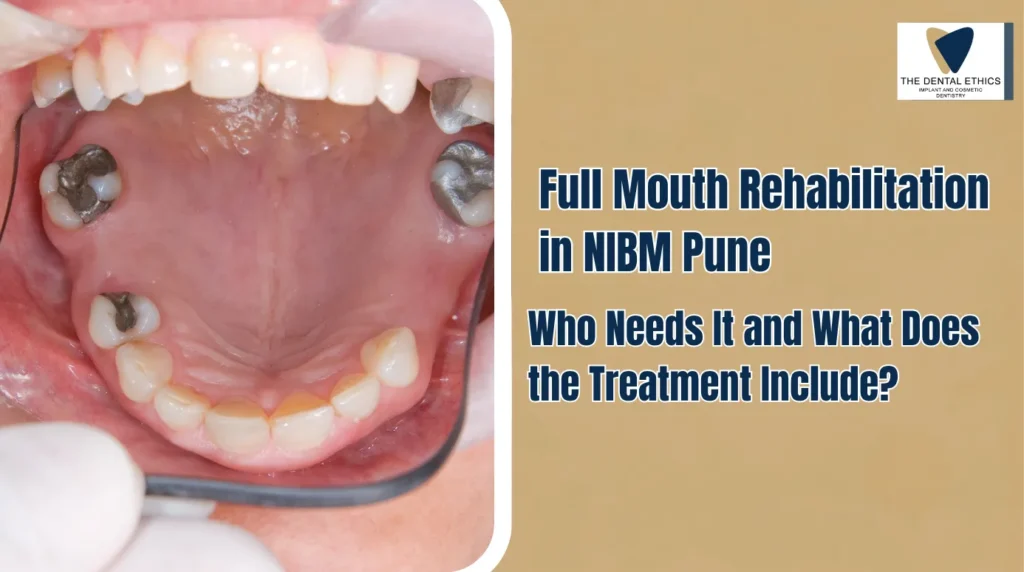
A healthy smile involves more than just having attractive teeth.. Your teeth, gums, bite, jaw joints, and overall oral function work together to maintain proper chewing, speech, comfort, and facial appearance. When several dental problems occur at the same time, treating individual teeth separately may not always provide the best long-term solution. In such cases, Full Mouth Rehabilitation in NIBM Pune can help restore oral health, function, and aesthetics through a carefully planned combination of dental treatments.At The Dental Ethics, Dr. Umang Shah and Dr. Jyoti Shah provide personalized dental care based on each patient’s oral condition, functional requirements, and smile goals. Full mouth rehabilitation involves detailed diagnosis and coordinated treatment planning to address multiple dental concerns in a systematic manner.
What Is Full Mouth Rehabilitation?
Full mouth rehabilitation is a personalized dental treatment plan that addresses several oral health concerns together. It focuses on restoring damaged, worn, or missing teeth while improving chewing ability, bite balance, comfort, and the overall appearance of the smile.It may involve a combination of restorative, prosthodontic, cosmetic, periodontal, and implant treatments depending on the patient’s needs. Instead of focusing on just one tooth, the treatment considers the entire mouth, including:
- Damaged or missing teeth
- Tooth decay
- Worn-down teeth
- Gum health
- Bite and jaw relationship
- Tooth alignment
- Smile aesthetics
- Chewing efficiency
- Existing dental restorations
The objective is to create a healthier, functional, comfortable, and natural-looking smile.
Who May Need Full Mouth Rehabilitation?
Not everyone requires full mouth rehabilitation.Patients with several dental issues that impact oral function or appearance are typically advised to use it.
1. Patients With Multiple Missing Teeth
Missing several teeth can make chewing difficult and may affect the way the remaining teeth meet. Over time, nearby teeth can shift from their original position, which may further impact bite balance and overall oral function.. Depending on the condition of the jawbone and remaining teeth, treatment may include dental implants, crowns, bridges, or dentures.
2. Severely Worn or Damaged Teeth
Teeth can become significantly worn due to grinding, acidic foods, aging, or other factors. Eating might become unpleasant because of severe wear that alters the bite. Tooth structure can be restored and function can be enhanced with full mouth therapy.
3. Extensive Tooth Decay
Patients with widespread cavities or severely compromised teeth may require several restorative procedures. A well-planned treatment approach can restore damaged teeth while supporting a balanced bite and comfortable function.
4. Patients With Bite Problems
An improper bite can place excessive pressure on certain teeth and may contribute to tooth wear, discomfort, or difficulty chewing. Comprehensive rehabilitation considers the relationship between the upper and lower teeth before restorative treatment begins.
5. Patients With Old or Failing Dental Work
Crowns, bridges, fillings, or dentures may deteriorate over time. When multiple restorations need replacement, a complete treatment plan can help ensure that the new restorations work together properly.
6. Patients Seeking Comprehensive Smile and Functional Improvement
Some patients have both cosmetic and functional issues. Full mouth rehabilitation can combine restorative and aesthetic dentistry to improve both the appearance and performance of the teeth.
What Does Full Mouth Rehabilitation Include?
The treatment varies from patient to patient. There isn’t just one process that works for everyone. At The Dental Ethics, the treatment plan is developed after a detailed evaluation.
Comprehensive Dental Examination
Understanding the patient’s present dental health is the first step. The dentist may evaluate teeth, gums, bite, existing restorations, jaw function, and overall oral health.When necessary, scans, X-rays, digital photos, and other diagnostic techniques may be used.
Treatment Planning
After a detailed dental evaluation, the treatment team identifies which teeth can be safely preserved and which may need restorative or replacement procedures. A customized treatment plan is then created, with each procedure scheduled in the appropriate sequence.
When multiple dental treatments are involved, proper planning is essential to ensure that every restoration complements the others. This coordinated approach helps achieve a balanced bite, improved function, better aesthetics, and long-term oral health.
Dental Crowns and Bridges
Damaged or weakened teeth may require crowns to restore their strength, shape, and appearance. Bridges can be considered when one or more teeth are missing and suitable supporting teeth are available.
Dental Implants
For patients with missing teeth, dental implants can offer a strong and reliable foundation for replacing lost teeth. They are designed to support crowns, bridges, or dentures while helping restore chewing ability, comfort, and a natural-looking smile.. Implant treatment may be incorporated into a full mouth rehabilitation plan when clinically appropriate.
Gum Treatment
Healthy gums are an important foundation for long-term dental treatment. If gum disease or inflammation is present, periodontal treatment may be required before restorative procedures.
Tooth-Coloured Restorations
Damaged or decayed teeth may be restored using tooth-coloured fillings or other appropriate restorative materials. The choice depends on the location and condition of the tooth.
Bite and Occlusion Management
An important part of comprehensive rehabilitation is ensuring that the upper and lower teeth fit together correctly. The dental team carefully assesses the patient’s bite and jaw alignment to ensure the restorations fit comfortably and function properly. Proper bite planning helps improve chewing efficiency while minimizing excessive pressure on the teeth and restorations.
Why Is Treatment Planning Important?
Full mouth rehabilitation is more complex than treating a single dental problem. Every procedure can influence another part of the mouth.For example, replacing missing teeth may affect the bite, while changing the shape of several teeth can influence chewing and jaw function. Therefore, proper sequencing and detailed planning are essential.
At The Dental Ethics, Dr. Umang Shah and Dr. Jyoti Shah focus on developing individualized treatment plans rather than using a one-size-fits-all approach. Where appropriate, modern digital dentistry and diagnostic technologies can support treatment planning and help patients understand their proposed treatment.
Benefits of Full Mouth Rehabilitation
Depending on the patient’s condition and treatment plan, full mouth rehabilitation may help:
- Improve chewing and oral function
- Restore damaged or missing teeth
- Improve bite balance
- Protect weakened teeth
- Support better oral hygiene
- Improve smile aesthetics
- Replace old or failing restorations
- Enhance overall dental comfort
- Create a more coordinated and natural-looking smile
Full Mouth Rehabilitation in NIBM Pune: Why Choose The Dental Ethics?
Choosing the right dental clinic is important when multiple treatments are involved. The Dental Ethics follows a comprehensive approach to diagnosis, planning, and treatment.
Dr. Umang Shah and Dr. Jyoti Shah work with patients to understand their concerns and develop treatment plans based on their individual dental condition. The focus is not simply on improving the appearance of teeth but also on restoring function, comfort, and long-term oral health.If you are looking for Full Mouth Rehabilitation in NIBM Pune, a detailed consultation can help determine whether comprehensive rehabilitation is appropriate for your dental needs.
Frequently Asked Questions
1. What is Full Mouth Rehabilitation in NIBM Pune?
Full mouth rehabilitation is a personalized treatment approach designed to address several dental concerns at the same time. Depending on the patient’s condition, treatment may involve damaged or missing teeth, gum problems, bite issues, worn teeth, and replacement of old or failing restorations.
2. How long does full mouth rehabilitation take?
The treatment timeline is different for every patient. It depends on the complexity of the case and the procedures involved. Some treatments can be completed in a few weeks, while more complex cases involving dental implants or extensive restorations may require several months.
3. Is full mouth rehabilitation painful?
Patient comfort is an important part of comprehensive dental treatment. Local anesthesia and modern dental techniques are used wherever appropriate to make procedures as comfortable as possible. Your dentist will also explain the procedure and aftercare instructions before treatment begins.
4. Can complete mouth rehabilitation include dental implants?
Yes, dental implants can be considered when one or more teeth are missing and the patient is suitable for implant treatment. They can be incorporated into the overall treatment plan to provide stable support for replacement teeth and improve oral function.
5. Is full mouth rehabilitation suitable only for older patients?
No. Full mouth rehabilitation is not based on age alone. It may be recommended for adults of different age groups who have extensive tooth damage, missing teeth, severe wear, bite problems, or multiple dental concerns that require comprehensive treatment.
6. How can I find out if I need full mouth rehabilitation?
A detailed dental examination is the best way to determine whether full mouth rehabilitation is appropriate for you. If you have several damaged, missing, worn, decayed, or previously treated teeth along with difficulty chewing or bite-related concerns, a comprehensive evaluation can help identify the most suitable treatment options.
Conclusion
Full mouth rehabilitation focuses on improving the overall health, function, comfort, and appearance of the mouth rather than treating individual dental problems in isolation. Depending on the patient’s needs, the treatment plan may combine restorative dentistry, prosthodontics, dental implants, gum care, and aesthetic procedures.If you are considering Full Mouth Rehabilitation in Swargate, Pune , The Dental Ethics provides personalized treatment planning based on your dental condition and long-term oral health goals. Dr. Umang Shah and Dr. Jyoti Shah can assess your needs and recommend a coordinated treatment approach to help restore comfortable function and a healthier, more confident smile.
Address | Office No. 204, Gagan Ela, Mohammadwadi Road, NIBM, Pune

