
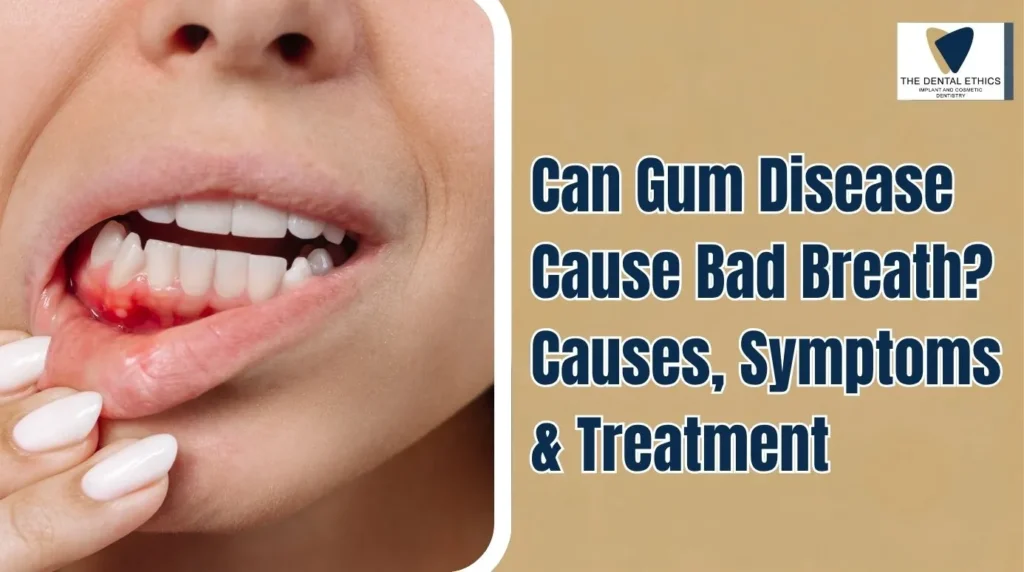
Yes, gum disease can contribute to persistent bad breath, medically known as halitosis. When plaque and harmful bacteria build up around the teeth and gums, they can produce unpleasant-smelling compounds that affect the freshness of your breath.Occasional bad breath can happen because of certain foods, dehydration, or inadequate oral hygiene. However, if bad breath continues for a long time and is accompanied by bleeding gums, swollen gums, gum tenderness, or a persistent bad taste, it may indicate an underlying oral health problem.
At The Dental Ethics, Dr. Umang Shah, Prosthodontist, can evaluate persistent bad breath and check for possible dental causes such as plaque accumulation, gum inflammation, periodontal problems, tooth decay, or other oral conditions. If you are searching for a Dentist in NIBM, Pune, a dental examination can help determine the cause of your symptoms and the treatment that may be appropriate for your condition.
If you have persistent bad breath or gum problems in NIBM, Pune, professional dental evaluation can help identify the underlying issue rather than simply masking the odour.
What Is Gum Disease?
Gum disease, also called periodontal disease, refers to inflammation or infection affecting the gums and supporting structures around the teeth.
It often begins with plaque, a thin layer containing bacteria that develops on teeth and along the gumline. When plaque is not removed effectively, it can harden into tartar or calculus.
Once tartar forms, ordinary brushing cannot completely remove it. Professional dental cleaning may therefore be required.
In its early stage, gum disease is commonly referred to as gingivitis. Without appropriate care, it can progress to periodontitis, which can affect the tissues and bone supporting the teeth.
Common Symptoms of Gum Disease
Possible signs include:
- Red or irritated gums
- Swelling around the gums
- Bleeding during brushing or flossing
- Gum tenderness
- Persistent bad breath
- Unpleasant taste in the mouth
- Gum recession
- Increased tooth sensitivity
- Loose or shifting teeth
- Discomfort while chewing
Not every symptom necessarily means that you have advanced gum disease. However, symptoms that persist or become worse should be assessed by a dental professional.
Why Can Gum Disease Cause Bad Breath?
A major connection between gum disease and bad breath is the accumulation of bacteria around the teeth and beneath the gumline.
Oral bacteria can break down proteins and release volatile sulfur compounds (VSCs) and other odour-producing substances. These compounds can contribute to an unpleasant smell from the mouth.
When gum inflammation progresses, spaces known as periodontal pockets may form between the gums and teeth. These pockets can trap bacteria, plaque, and debris, making thorough cleaning more difficult.
This can create a cycle:
Plaque accumulation → bacterial growth → gum inflammation → periodontal pockets → odour-producing compounds → persistent bad breath
Because the underlying bacteria or gum condition remains, chewing gum or using a breath freshener may only provide temporary relief.
Does Everyone With Bad Breath Have Gum Disease?
No. Bad breath is not always caused by gum disease.
Halitosis can have several possible causes, including:
- Inadequate oral hygiene
- Bacteria on the tongue
- Tooth decay
- Dry mouth
- Certain foods and beverages
- Tobacco use
- Some medications
- Oral infections
- Denture-related issues
A dry mouth can also contribute to unpleasant breath because saliva naturally helps cleanse the mouth and control some oral bacteria.
For this reason, persistent bad breath should not automatically be assumed to be a gum problem. A dental examination can help identify the possible source.
Signs Your Bad Breath May Be Linked to Gum Disease
Persistent bad breath deserves greater attention when it occurs together with other gum-related symptoms.
1. Gums That Bleed
If your gums frequently bleed while brushing or cleaning between your teeth, it may indicate gum inflammation and should not simply be ignored.
2. Red, Swollen or Tender Gums
Gums that remain noticeably red, swollen, or uncomfortable may require professional evaluation.
3. Persistent Bad Taste
An ongoing unpleasant taste in the mouth along with bad breath can occur with certain oral conditions, including gum problems.
4. Receding Gums
When the gumline moves away from the tooth surface, more of the tooth may become visible. Gum recession can have several causes, including periodontal disease.
5. Loose or Shifting Teeth
Teeth that become loose or change position may indicate damage to the tissues supporting the teeth. Advanced periodontal disease is one possible cause and requires prompt dental assessment.
How Are Gum Disease and Bad Breath Treated?
The appropriate treatment depends on what is causing the bad breath and the condition of your gums.
During an examination, a dentist may assess your gums, look for plaque and tartar, evaluate periodontal pockets, and recommend dental X-rays when clinically required.
Depending on the findings, treatment may include:
- Professional dental cleaning
- Scaling and root planing or deep periodontal cleaning
- Improved brushing techniques
- Flossing or interdental cleaning
- Tongue cleaning
- Antimicrobial oral products when appropriate
- Treatment for gum disease
- Further periodontal care for advanced cases
Treating the underlying dental condition is generally more useful than simply trying to cover the smell with a breath freshener.
How Can You Reduce the Risk of Gum Disease and Bad Breath?
Maintaining consistent oral hygiene can help control plaque and support healthier gums.
Consider these daily habits:
- Brush twice daily with fluoride toothpaste.
- Clean between your teeth using floss or an appropriate interdental cleaner.
- Gently clean your tongue.
- Drink adequate water throughout the day.
- Avoid tobacco products.
- Attend regular dental examinations.
- Get professional cleaning when recommended by your dentist.
Brushing cleans many tooth surfaces, but it may not adequately remove plaque from every space between the teeth. Interdental cleaning is therefore an important part of an effective oral hygiene routine.
When Should You See a Dentist for Bad Breath?
If your bad breath continues even after improving your oral hygiene, consider scheduling a dental examination.
Professional evaluation becomes particularly important if persistent bad breath occurs with:
- Bleeding gums
- Swollen or red gums
- Gum recession
- Loose teeth
- Persistent bad taste
- Tooth pain or sensitivity
Finding the cause early can help determine whether the problem is related to gum disease, tooth decay, dry mouth, oral infection, or another condition.
Frequently Asked Questions
Can gum disease cause persistent bad breath?
Yes. Gum disease can contribute to persistent bad breath because bacteria associated with plaque and periodontal inflammation can produce unpleasant-smelling compounds.
How can I tell whether gum disease is causing my bad breath?
Bad breath together with symptoms such as bleeding gums, swollen gums, gum recession, persistent bad taste, or loose teeth may indicate a gum-related problem. However, only a dental examination can determine the actual cause.
Will bad breath improve after gum disease treatment?
If gum disease is responsible for the odour, addressing the gum condition and improving oral hygiene may help reduce bad breath. The outcome depends on the underlying cause and severity.
Can mouthwash cure gum disease?
Mouthwash should not be considered a replacement for professional dental treatment when gum disease is present. Some mouthrinses may help control bacteria or temporarily reduce bad breath, depending on their ingredients and how they are used.
Are bleeding gums and bad breath connected?
They can be. Bleeding gums and persistent bad breath may occur together in people with gum inflammation or periodontal disease. If these symptoms continue, a dental evaluation is recommended.
Can poor oral hygiene cause bad breath without gum disease?
Yes. Plaque buildup, food debris, tongue bacteria, and inadequate cleaning can contribute to bad breath even when significant gum disease is not present.
Get Professional Dental Care for Gum Problems in NIBM, Pune
Persistent bad breath, bleeding gums, swollen gums, or an unpleasant taste should not always be treated as a temporary problem.
At The Dental Ethics, Dr. Umang Shah, Prosthodontist, can assess your oral health and help determine whether gum disease or another dental condition may be contributing to your symptoms.
If you are looking for a Dentist in NIBM, Pune, gum treatment in Pune, or professional evaluation for persistent bad breath, a timely dental consultation can help identify the underlying cause and appropriate treatment options.
The Dental Ethics provides patient-focused dental care with an emphasis on proper diagnosis, preventive care, and treatment tailored to individual oral health needs.

